


Specialist Mobile Clinic Vans & Healthcare Vehicles
Purpose-built mobile clinic vans and medical vehicle fitouts for audiology, dental and specialist healthcare services, designed around clinical workflow, equipment, power and operational requirements.
Mercedes-Benz VanPartner | Specialist Sprinter Conversions | ISO 9001 Certified

Mobile Medical Vans & Healthcare Vehicle Conversions
Oz Interior by Design specialises in purpose-built mobile medical vans, mobile clinic vans and healthcare vehicle conversions in Sydney, supporting healthcare providers, audiologists, dental professionals and specialist service organisations with tailored mobile clinical environments.
Each specialist vehicle conversion is designed around the required clinical workflow, equipment and operating environment — from mobile audiology and hearing clinics to mobile dental vans, treatment vehicles and other purpose-built healthcare applications.
Planning a specialist healthcare vehicle involves more than the clinical layout. Our Commercial Van Conversion Guide explains key considerations including vehicle selection, payload, electrical systems, equipment integration, climate control and certification.
Planning a mobile clinic conversion? Use our Project Estimator to explore vehicle fitout options, equipment requirements and a preliminary project scope before speaking with our team.
Learn more about our compliance and technical traceability approach
Mercedes-Benz Sprinter Mobile Audiology Clinic – Refined Hearing
The objective was to create a self-contained mobile hearing clinic capable of delivering professional audiology services across metropolitan, regional and remote locations. The conversion needed to support clinical workflow, specialist hearing equipment, acoustic testing requirements, stable off-grid power, climate control, connectivity and safe day-to-day vehicle operation.
Project highlights:
-
Certified purpose-built audiometric booth with independent acoustic performance testing
-
600 Ah Victron battery bank with 3000 W inverter/charger
-
Dual Victron DC-DC charging systems
-
1,680 W roof-mounted solar array
-
24 V air-conditioning and diesel heating
-
Integrated self-levelling system
-
Starlink satellite connectivity
-
Height- and tilt-adjustable clinical chair with custom upholstery
-
Purpose-designed clinical workspace for audiology and diagnostic services
Project Outcome:
The completed vehicle operates as a self-contained mobile audiology clinic combining specialist acoustic performance, independent onboard power, climate control, connectivity and a purpose-designed clinical workspace within a Mercedes-Benz Sprinter platform.
The audiometric booth underwent independent acoustic performance testing following completion, providing documented validation of the acoustic environment for its intended clinical application.
For Healthcare Organisations & Procurement Teams
OIBD works with healthcare providers, audiology practices, allied health organisations and specialist service operators to develop mobile clinical environments around real operational requirements. Projects can be planned as one-off specialist vehicles or repeatable fleet vehicle programs, with vehicle selection, CAD design, equipment integration, electrical systems, compliance requirements, documentation and handover considered from the outset.
For procurement teams, this provides a clearer path from project brief and technical review through to manufacture, certification and delivery, with traceability and supporting project documentation built into the process.
Choose Your Mobile Clinic Solution
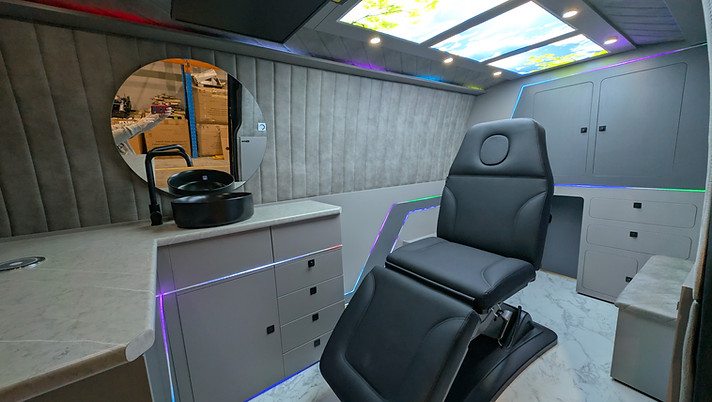
Mobile Treatment, Beauty & Laser Clinic
Purpose-built mobile beauty, aesthetic and laser treatment clinics designed around professional equipment, client comfort and efficient workflows. Each conversion incorporates practical treatment areas, integrated storage, lighting, power and climate control to create a professional environment wherever services are delivered.
Mobile Audiology & Hearing Clinic
A purpose-built mobile audiology clinic integrating specialist hearing equipment, an acoustically tested audiometric booth, independent power, climate control, connectivity and clinical workspace within a professionally designed mobile environment.

Custom Audiometric Booths for Mobile Hearing Clinics
Purpose-built for mobile audiology applications, our acoustic hearing booths integrate sound isolation, controlled acoustics, ventilation and specialist equipment connections within the available vehicle space. Our completed mobile hearing clinic has undergone acoustic performance testing for its intended clinical application, demonstrating how a specialist audiometric environment can be successfully integrated into a commercial vehicle.

Planning a Mobile Healthcare Clinic Around Clinical Workflow
A successful mobile healthcare vehicle begins with a clear understanding of how the service will operate. Oz Interior by Design works with healthcare providers, clinical teams, equipment suppliers and relevant specialists to translate clinical, technical and operational requirements into a practical vehicle layout and conversion scope.
Identifying these requirements before construction helps determine the appropriate vehicle platform, payload capacity, system requirements, weight distribution and supporting certification pathway.
Clinical Purpose & Workflow
Define the services to be delivered, number of clinicians and occupants, patient movement, accessibility, privacy and the sequence of clinical tasks inside the vehicle.
Equipment & Storage
Identify specialist equipment, dimensions, weight, electrical demand, required connections and secure storage so the vehicle layout can be planned around the equipment from the outset.
Vehicle & Payload
Consider vehicle dimensions, available payload, axle capacities, equipment weight and load distribution when selecting the appropriate vehicle platform and configuration.
Power & Environment
Plan battery capacity, charging, shore power, climate control, ventilation, lighting and expected operating duration to support the clinic away from fixed facilities.
Connectivity & Utilities
Consider data, communications, telehealth, internet connectivity and, where required, water supply, wastewater and other clinical utilities.
Certification & Handover
Identify applicable testing, certification, traceability and documentation requirements, with relevant records, certificates and operating information incorporated into the completed vehicle handover.
Mobile Clinic Conversion FAQs
Should I buy a van before speaking to a mobile clinic converter?
Ideally, speak to your converter before purchasing the vehicle. Your clinical equipment, workspace, occupants, storage and power requirements all influence the vehicle size and available payload needed for the finished clinic.
OIBD can review your proposed service and equipment requirements to help assess suitable vehicle options before you commit. If you already own a van, we can assess its suitability and identify practical limitations before detailed design begins.
Can a mobile clinic operate without connecting to mains power?
Yes, a mobile clinic can be designed to operate using an independent battery and inverter system, with charging arrangements selected around its intended use. Depending on the project, these may include vehicle charging, solar and mains charging between appointments or overnight.
The system needs to support the actual equipment, air conditioning and expected operating hours. OIBD assesses these requirements during planning so the proposed power system reflects how the clinic will work each day.
What vehicle is suitable for a mobile healthcare clinic?
The most suitable vehicle depends on the clinical service, equipment, number of occupants, accessibility requirements, payload and expected operating environment. OIBD assesses these factors before recommending a vehicle platform or configuration.
Larger applications may suit vehicles such as the Mercedes-Benz Sprinter, while more compact services may be better suited to smaller commercial vans. Vehicle selection should be considered early so the conversion can be planned around available payload, axle capacities, equipment requirements and the intended clinical workflow.
Can OIBD integrate specialist clinical equipment into a mobile clinic?
Yes. OIBD can design the vehicle layout around specialist clinical equipment, allowing for equipment dimensions, weight, power demand, ventilation, data connections, access and secure storage.
Planning the equipment early helps us position cabinetry, electrical systems and work areas correctly while also considering payload, weight distribution and day-to-day clinical workflow. For specialist projects, equipment integration is reviewed as part of the overall vehicle design rather than added after the fitout is complete.
How are payload and weight distribution considered in a mobile clinic conversion?
Payload and weight distribution are considered from the early design stage because clinical equipment, cabinetry, batteries, water systems and fixed infrastructure can add significant weight to the vehicle.
OIBD reviews the proposed equipment and layout against the selected vehicle’s available payload and axle capacities, then plans the conversion to help maintain a practical and compliant load distribution. Where required, final vehicle weights and certification requirements can also form part of the handover process.
Can a mobile healthcare clinic operate independently from mains power?
Yes. Depending on the clinical application and equipment requirements, OIBD can design onboard power systems using lithium batteries, inverters, charging systems, solar and shore power to support operation away from fixed facilities.
The system is planned around expected electrical loads, operating time, climate control, specialist equipment and charging requirements so the vehicle can support reliable day-to-day use in mobile or remote environments.
What certification and documentation may be required for a mobile clinic conversion?
The requirements depend on the vehicle, equipment and scope of the conversion. Depending on the project, this may include vehicle modification approvals, electrical testing, component documentation, weight records and other certification relevant to the completed build.
OIBD incorporates traceability and handover documentation into the project process so applicable records, certificates, operating information and supporting documentation can be provided with the completed vehicle.
How much does a purpose-built mobile clinic van cost?
The cost of a purpose-built mobile clinic van depends on the vehicle platform, clinical equipment, electrical and power requirements, climate control, cabinetry, communications, specialist systems and the level of testing or certification required for the project.
OIBD develops each mobile clinic conversion around the intended clinical service, equipment and operational requirements, so pricing is determined once the proposed vehicle, equipment and conversion scope have been defined.
For early-stage planning, clients can use our Project Estimator to explore the likely scope and requirements before discussing the project with our team.
What should I include in a mobile dental clinic conversion budget?
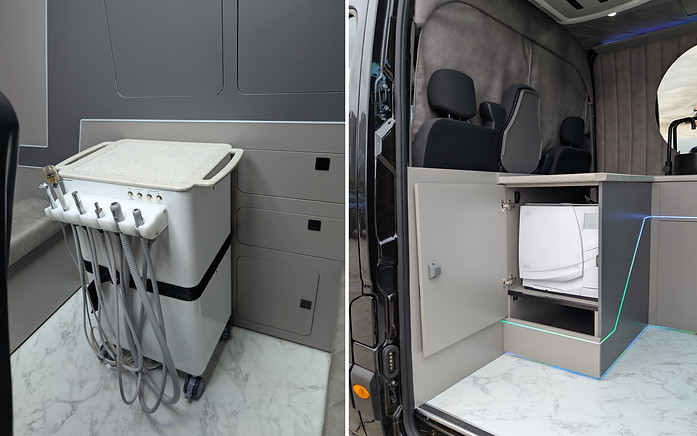
A mobile dental clinic budget should account for the base vehicle, dental equipment and the conversion itself. Key cost factors include treatment layout, cabinetry, equipment mounting, electrical systems, air conditioning, fresh water and wastewater arrangements, and any equipment-specific plumbing, suction or compressed-air requirements.
Clarifying which equipment the client or equipment supplier will provide helps define responsibilities and avoid omissions. OIBD develops the conversion scope around the proposed equipment, clinical workflow and vehicle capacity so the quotation can identify inclusions, exclusions and allowances.
How are transport and calibration requirements assessed for sensitive clinical equipment?
Equipment intended for a fixed clinic may have additional requirements when installed in a vehicle. Before integration, the project needs to establish the manufacturer’s conditions for transport, mounting, vibration, operating environment and any checks or recalibration required after relocation.
OIBD considers these requirements when planning equipment positioning, restraints, service connections and access. Suitability for mobile use and any commissioning or calibration requirements should be confirmed with the equipment manufacturer or authorised supplier before the installation scope is finalised.
How is backup power planned for a mobile medical or diagnostic clinic?
Backup power planning begins by identifying which equipment and services must remain available if the normal supply is interrupted, and for how long. These essential loads may differ from the clinic’s full operating load.
Depending on the project, the design may include reserved battery capacity, an alternative power connection, system monitoring and an agreed shutdown or recovery procedure. OIBD plans the proposed arrangements around equipment requirements and operating conditions, with the healthcare provider defining clinical priorities. Expected backup duration depends on the final system capacity and the loads being used.
Discuss Your Mobile Clinic Project
Whether you are planning a mobile audiology clinic, dental vehicle, specialist treatment environment or another purpose-built healthcare service, OIBD can help develop the vehicle around your clinical workflow, equipment, power requirements, payload and operational needs.
Talk to us early in the planning process so vehicle selection and conversion requirements can be considered together.

